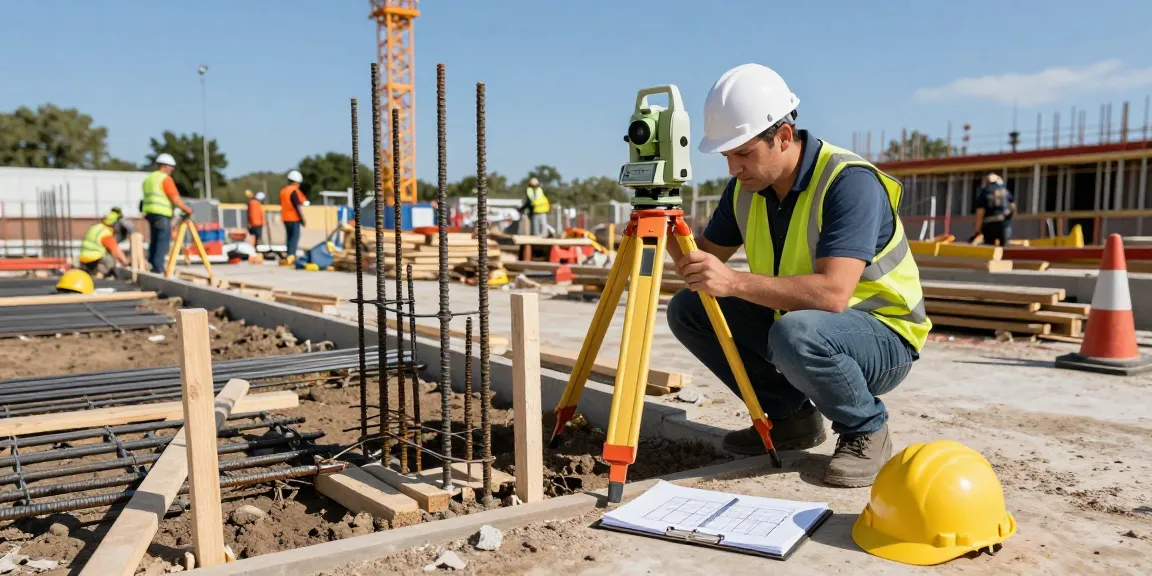
Understanding Site Engineering Setting Out
Site engineering setting out is a critical aspect of the construction process that focuses on the accurate positioning and alignment of building elements according to architectural designs. Whether you're constructing residential homes, commercial buildings, or infrastructure projects, precise setting out ensures that each structure adheres to design specifications and local regulations. As construction practices evolve, the demand for skilled site engineers is on the rise, particularly in regions like Kent where numerous development projects are underway.
When exploring options, Site Engineering Setting Out Kent offers comprehensive insights, ensuring that construction projects proceed smoothly and efficiently.
What is Site Engineering Setting Out?
Site engineering setting out refers to the systematic process of translating design plans into physical markers on a construction site. This practice is essential to ensure that all building components, such as walls, foundations, and utilities, are constructed in their correct locations. The process typically involves the following key activities:
- Positioning Structures: Site engineers establish the locations of buildings and key structures, marking them with stakes or other markers to guide construction.
- Aligning and Leveling: Ensuring that elements are straight and at the correct elevation is vital for structural integrity. Engineers use various tools to achieve this.
- Checking Dimensions: Engineers verify that all dimensions, including distances and angles, conform to design specifications.
- Controlling Levels and Gradients: Proper drainage and accessibility are maintained through accurate level setting, particularly for surfaces like roads and pathways.
- Quality Control: Setting out serves as a quality assurance measure, helping to identify errors early and minimize rework.
The Importance of Accurate Setting Out in Construction
The significance of accurate setting out cannot be overstated, as it lays the foundation for all subsequent construction activities. Errors in this phase can lead to costly mistakes, such as:
- Structural Misalignment: Foundations or walls built in the wrong location can jeopardize the entire structure.
- Increased Costs: Rectifying mistakes made during the setting out phase can result in significant financial losses.
- Delays: Errors can cause work stoppages, resulting in project delays that affect timelines and budgets.
Ultimately, precise setting out enhances the overall efficiency of the construction process, ensuring that projects stay on schedule and within budget.
Key Tools and Equipment Used in Site Engineering
To execute effective setting out, engineers rely on a variety of tools and equipment designed for precision and accuracy:
- Total Stations: These electronic instruments combine the functions of a theodolite, distance meter, and sometimes a GPS system to provide precise measurements.
- Theodolites: Used for measuring horizontal and vertical angles, theodolites are essential for ensuring accurate alignment of structures.
- Levels: Essential for establishing a horizontal plane, levels enable engineers to control elevations accurately.
- GPS Equipment: Global Positioning System technology allows for real-time positioning and is particularly useful in large-scale projects.
- AutoCAD Software: Engineers often utilise CAD software to create detailed layouts and modifications based on site conditions.
Roles and Responsibilities of Setting Out Engineers
A setting out engineer's role extends beyond merely marking boundaries. They are essential team members in the construction process, contributing to both planning and execution phases. Key responsibilities include:
Daily Tasks of a Setting Out Engineer
The daily tasks of a setting out engineer can be diverse and variable, often dictated by the current phase of the project. Common responsibilities include:
- Conducting site surveys and assessments.
- Setting out reference points for construction workers.
- Collaborating with architects and other engineers to clarify design details.
- Monitoring ongoing construction activities to ensure compliance with set parameters.
- Maintaining records of measurements and site modifications.
Essential Qualifications and Skills Required
To be effective in their roles, setting out engineers typically require a combination of relevant qualifications and skills, including:
- A degree in civil engineering, surveying, or a related discipline.
- Proficiency with surveying equipment and software.
- Strong analytical abilities and attention to detail.
- Excellent communication skills for liaising with project teams.
- Knowledge of health and safety regulations pertaining to construction sites.
Health and Safety Regulations for Site Engineers
Health and safety are paramount in construction, and setting out engineers must navigate numerous regulations to ensure compliance. Key safety practices include:
- Conducting risk assessments before commencing work.
- Utilising personal protective equipment (PPE) at all times.
- Staying updated on health and safety protocols and legislation.
- Regularly participating in safety training and workshops.
Common Challenges in Site Engineering Setting Out
Despite best efforts, setting out engineers often encounter various challenges that can hinder the accuracy of their work:
Dealing with Environmental Factors
Environmental factors such as weather conditions and ground conditions can complicate the setting out process:
- Weather Conditions: Rain, snow, or high winds can affect visibility and equipment operation.
- Ground Conditions: Variability in soil types or underground utilities can lead to unexpected complications.
Avoiding Common Setting Out Errors
Common errors in setting out can stem from inexperience, inadequate tools, or miscommunication. Engineers should focus on:
- Implementing rigorous checks and balances in measurements.
- Utilising multiple methods to verify critical points.
- Maintaining clear communication with the construction team to reduce misunderstandings.
Best Practices for Effective Site Setup
To mitigate challenges, best practices can be adopted, including:
- Thorough pre-construction planning and design review.
- Regular maintenance and calibration of surveying equipment.
- Utilising 3D modelling and virtual reality tools to visualise and anticipate site conditions.
Innovative Technologies in Site Engineering
The construction industry is rapidly evolving with the integration of innovative technologies that enhance efficiency and accuracy:
Advancements in Surveying Equipment
Modern surveying tools have expanded beyond traditional instruments, leading to increased precision and speed. Innovations include:
- Robotic total stations that automate many tasks traditionally performed by engineers.
- Laser scanning technology that can capture complex site geometry in high detail.
- Mobile mapping solutions that enable rapid data collection over large areas.
Integration of BIM in Setting Out Processes
Building Information Modeling (BIM) has transformed how engineers approach setting out:
- BIM allows for comprehensive visualisation of construction projects before ground is broken.
- It aids in coordinating various project stakeholders, improving accuracy and communication.
- BIM models can be directly referenced during the setting out phase, reducing errors.
The Future of Drone Technology in Site Engineering
Drones are emerging as a transformative resource in site engineering. They offer:
- High-resolution aerial imagery for better site assessment and planning.
- Real-time data collection that enhances decision-making.
- Cost savings by reducing the need for extensive ground surveying.
Case Studies and Success Stories
Exploring successful case studies provides valuable insights into the application of site engineering in real-world scenarios:
Notable Projects Using Site Engineering in Kent
Several noteworthy projects in Kent have exemplified the effective use of site engineering setting out, including:
- The recent redevelopment of a historic site into a mixed-use development, which required meticulous planning and execution to preserve historical elements while incorporating modern amenities.
- Infrastructure improvements along major transport routes have demonstrated how accurate setting out can expedite large-scale projects and minimise disruption.
Lessons Learned from Setting Out Failures
Failures in setting out, while unfortunate, provide crucial learning opportunities:
- Case studies of projects that suffered from significant rework due to misalignment stress the need for thorough pre-project inspections.
- Failing to adhere to quality control measures can lead to costly mistakes that could have been easily avoided.
Expert Interviews: Insights from Leading Engineers
Interviewing experienced engineers reveals key insights into the industry:
- Many emphasise the importance of continuous education and adapting to new technologies and methodologies.
- Networking and collaboration with other professionals are considered vital for success in complex projects.
What is the 3-4-5 method of setting out?
The 3-4-5 method is a time-tested technique used by setting out engineers to ensure right angles by using simple mathematics:
- This method involves measuring a triangle with sides of 3, 4, and 5 units; the resulting angle is a perfect right angle, making it useful for setting out corners.
- It's commonly utilised in various construction settings, particularly for foundations and structural elements.
What qualifications do I need to be a setting out engineer?
To become a setting out engineer, candidates typically pursue:
- A degree in civil engineering, surveying, or a related field.
- Practical experience through internships or on-the-job training.
- Professional certifications, such as CSCS (Construction Skills Certification Scheme) cards, are often necessary.
What are the key differences between a site engineer and a setting out engineer?
While both roles are crucial in the construction process, they have distinct differences:
- Setting out engineers focus specifically on translating design plans to site while ensuring accuracy in positioning.
- Site engineers generally oversee the overall construction process, ensuring that work adheres to quality and regulatory standards.
Is Kent an ideal location for construction projects?
Kent presents numerous advantageous conditions for construction:
- The area features a diverse range of projects, from residential to commercial, contributing to ongoing demand for skilled engineers.
- Its proximity to London makes it an attractive option for developers seeking to expand into the South East.
What tools or software are best for accurate site setting out?
Effective site setting out requires a combination of reliable tools and software:
- Total stations and GPS equipment are essential for high accuracy.
- Software such as AutoCAD and BIM platforms greatly enhance planning and execution capabilities.